Steel plays a vital role in construction, fabrication, and industrial development. Choosing between branded steel and locally manufactured steel can directly impact the strength, safety, and long-term durability of a project. While local steel may appear more economical initially, understanding the differences helps buyers make better investment decisions.
What is Branded Steel?
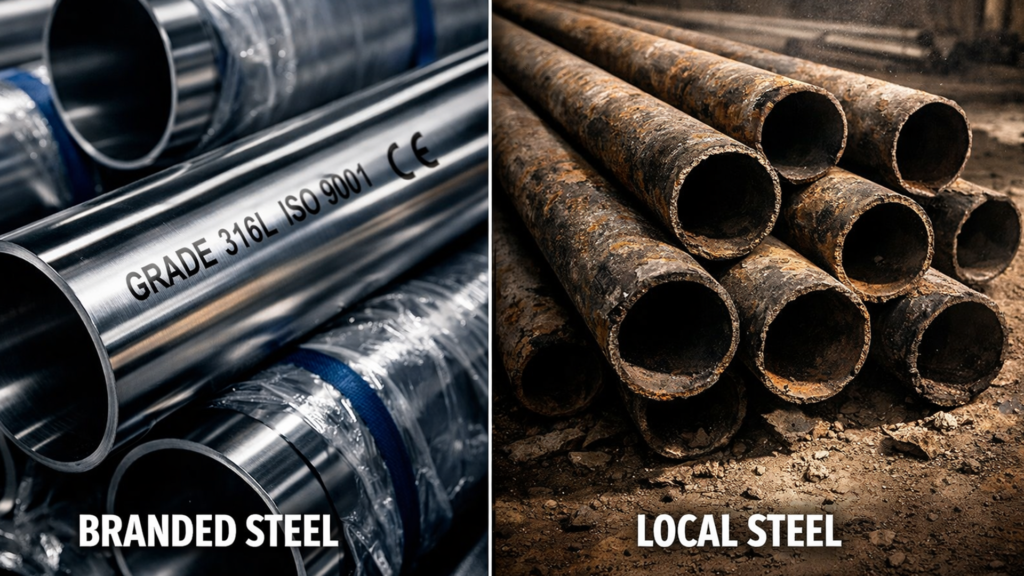
Branded steel is manufactured by recognized companies that follow proper quality control systems, standardized production processes, and industry certifications. These products undergo testing to ensure consistency in strength, thickness, and performance.
Key Advantages of Branded Steel
- Consistent quality and uniform thickness.
- Certified manufacturing standards.
- Better load-bearing capacity.
- Reliable performance in long-term usage.
- Proper branding and traceability.
Commonly used in residential buildings, commercial projects, industrial structures, and large infrastructure developments.
What is Local Steel?
Local steel is often produced by smaller manufacturers or unorganized units. While some products may perform adequately for small-scale work, quality consistency can vary depending on manufacturing methods and raw materials used.
Common Characteristics of Local Steel
- Lower initial purchase cost.
- Limited quality testing or certification.
- Inconsistent thickness or finishing in some cases.
- Higher risk of corrosion or structural weakness over time.
Local steel is sometimes used in temporary structures or low-load applications.
Branded Steel vs Local Steel — Key Comparison
| Feature | Branded Steel | Local Steel |
|---|---|---|
| Quality Consistency | High | Can vary |
| Certification | Standard tested | Often limited |
| Strength & Durability | Reliable long-term | Depends on manufacturer |
| Corrosion Resistance | Better finishing/coating | May require extra care |
| Safety Standards | Verified | Not always guaranteed |
| Initial Cost | Slightly higher | Lower |
| Long-Term Cost | More economical | Maintenance may increase |
Strength and Structural Reliability
Branded steel maintains proper chemical composition and thickness standards, allowing it to handle heavy structural loads safely. Local steel may sometimes lack uniform strength, which can lead to bending or damage under pressure.
Long-Term Cost Efficiency
Although branded steel may cost slightly more initially, it reduces repair, replacement, and maintenance expenses over time. Poor-quality materials often result in hidden long-term costs.
How to Identify Genuine Quality Steel
- Check manufacturer branding and certification markings.
- Verify weight and thickness according to specifications.
- Inspect surface finishing and welding quality.
- Purchase from authorized distributors or trusted suppliers.
Conclusion
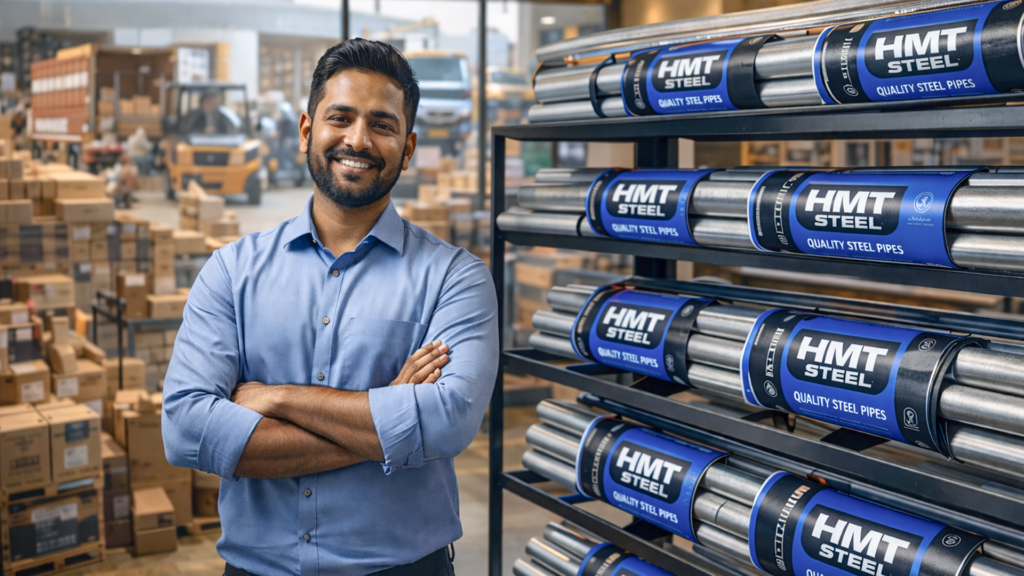
Selecting the right steel is essential for safe and durable construction. Branded steel offers consistency, certified quality, and long-term reliability, while local steel may suit limited or temporary applications. Trusted distributors like HMT Steel help customers choose dependable steel solutions that support strong and secure projects.
— HMT Steel